pitchLogic Softball Review: Stop Guessing and Start Measuring
Jul 24, 2026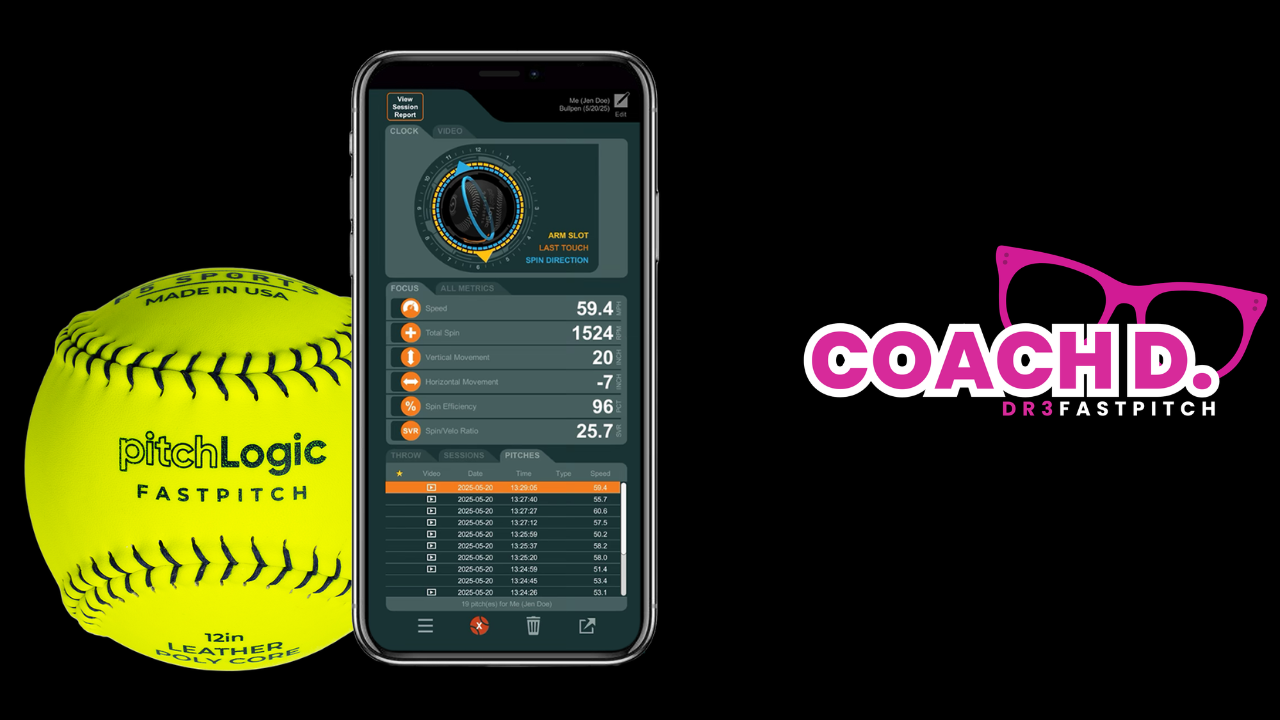
By Coach D | DR3 Fastpitch
For years, softball pitching instruction has relied heavily on what coaches can see. Today, pitchLogic Softball gives pitchers, parents, and instructors a way to measure what happens after the ball leaves the pitcher’s hand.
As coaches, we watch mechanics, timing, body movement, posture, and ball flight. We make adjustments based on what we see and what the athlete feels.
But here’s the question I started asking myself:
What if we could actually measure what was happening from the moment the ball left the pitcher’s hand?
That’s exactly what pitchLogic Softball allows us to do.
At DR3 Fastpitch, one of our core beliefs is simple:
The more we educate players and parents, the faster athletes develop.
pitchLogic gives us objective feedback that takes the guesswork out of pitching development. Instead of saying, “I think that pitch was better,” we can actually prove it.
That’s a game changer.
What Is pitchLogic Softball?
pitchLogic Softball is a smart training softball that looks and feels like a regulation softball but contains motion sensors built directly inside the ball.
Once connected to the pitchLogic app through Bluetooth, every pitch is analyzed instantly. Within seconds, you can see metrics such as:
- Pitch speed
- Spin rate (RPM)
- Spin efficiency
- Spin direction
- Horizontal movement
- Vertical movement
- Arm slot
- Release data
- Break direction
- Last touch
- Pitch shape
The coolest part? There’s no expensive camera system to set up, no indoor lab, and no giant facility required.
You pair the ball with your phone, throw a bullpen, and immediately start learning.
Before You Read On
If you already know you want objective feedback in your daughter's bullpens, you can grab a pitchLogic ball through our link below. Use our code and you'll save $10.
Get pitchLogic & Save $10Use discount code DR3 at checkout
Why I Started Using pitchLogic
I’ve always believed coaching should be based on more than opinions.
I don’t want to tell a pitcher, “That looked better.” I want to show her why it was better.
One of the biggest things pitchLogic has done for me is connect mechanics to results.
Maybe we change how she uses her fingers. Maybe we improve forearm pronation. Maybe we clean up her front side. Immediately, we can look at the numbers and say:
- “Yep—that adjustment increased your spin.”
- “That change created more vertical movement.”
- “Your arm slot became much more consistent.”
Instead of guessing, we’re measuring. And that’s how athletes learn faster.
How pitchLogic Helps Parents Understand Pitching
Instead of sitting through a lesson hearing terms like spin efficiency, pronation, arm slot, or vertical movement without knowing what they mean, parents can now actually see the results.
They begin to understand:
- Why one rise ball moves better than another
- Why spin matters more than simply throwing harder
- Why release consistency creates command
- Why movement often beats velocity
That allows parents to better support their daughters between lessons—and that’s exactly what our mission at DR3 Fastpitch is all about.
What pitchLogic Data Reveals About a Softball Pitch
Why Velocity Is Not Everything
One of the first questions I get asked is:
“Coach D, how hard does she throw?”
Velocity absolutely matters. But here’s what I tell parents all the time:
I’d rather have a pitcher throwing 58 mph with elite movement than 62 mph with a straight ball.
Hitters don’t swing at radar-gun numbers. They swing at movement.
pitchLogic helps us understand what actually makes pitches difficult to hit.
Understanding Spin Rate and Spin Efficiency
Every softball spins, but not every spin creates movement.
pitchLogic measures both spin rate (RPM) and spin efficiency:
- Spin rate tells us how fast the ball is spinning.
- Spin efficiency tells us how much of that spin is actually creating movement.
Two pitchers can produce identical spin rates, yet one pitch can move dramatically more because it uses its spin more efficiently.
That’s why chasing one number never tells the whole story.
How pitchLogic Measures Rise-Ball Movement
One of my favorite conversations to have with pitchers is about rise balls.
Rise balls don’t actually rise. Gravity wins every single time.
A great rise ball simply drops less than the hitter expects, creating the illusion that it’s climbing through the zone. pitchLogic measures that vertical movement.
Instead of saying, “I think my rise ball looked good,” we can measure exactly how much carry the pitch created.
That’s pretty incredible.
Comparing Different Softball Pitch Shapes
Whether it’s your:
- Rise ball
- Curveball
- Drop ball
- Off-speed curve
- Screwball
- Changeup
- Fastball
Every pitch has its own movement profile.
The goal isn’t to make every pitch move a lot. The goal is to make every pitch move differently.
The harder it is for hitters to recognize pitches that come out of the same arm slot but finish in different locations, the more successful you’ll become.
How to Use pitchLogic for Pitcher Development
How to Use pitchLogic During a Bullpen
This is probably my favorite part.
Instead of throwing 100 pitches and hoping something improves, every bullpen has an objective. We can answer questions like:
- Did my spin efficiency improve today?
- Did my rise ball gain more carry?
- Is my arm slot repeating?
- Did that grip adjustment actually increase RPM?
- Am I creating more separation between my pitches?
Every bullpen becomes intentional. Every pitch teaches us something.
Why I Trust the pitchLogic Data
One of my mentors, Esai Rivera, owner of The Foot Doctor (@thefootdoctor_esia), has spent a tremendous amount of time testing pitchLogic alongside Rapsodo.
One of the biggest takeaways from his testing is that the data between the two systems is remarkably similar, especially in the metrics that matter most for softball pitchers.
The biggest difference? pitchLogic is much more affordable and portable.
That means families and instructors can access high-level pitching analytics without needing a facility with a Rapsodo setup. That’s huge.
How Advanced Softball Programs Use Pitching Data
This isn’t just technology for lessons.
Many of the top softball programs in the country—including programs like UCLA and Tennessee—utilize pitchLogic as part of player development.
Elite softball and baseball athletes across the country are using this technology because objective feedback accelerates development.
When the best athletes in the country are measuring their bullpens instead of guessing, there’s probably something to learn from that.
Who Should Use pitchLogic Softball?
What Age Is pitchLogic Best For?
This is one question I get all the time.
I typically recommend pitchLogic for athletes around 12 years old and older. Part of that is because pitchLogic currently uses a 12-inch softball.
More importantly, around that age, pitchers are beginning to develop multiple pitches, build consistent mechanics, and prepare for middle school, high school, and eventually recruiting.
That’s when this information becomes incredibly valuable.
How pitchLogic Can Help With Softball Recruiting
One thing I really love is being able to track progress over months—and even years.
Instead of simply saying, “My daughter has improved,” you can actually show it through improvements in:
- Velocity
- RPM
- Spin efficiency
- Vertical movement
- Horizontal movement
- Command
- Pitch shapes
College coaches love seeing objective improvement. It demonstrates intentional development and provides another layer of information beyond radar-gun readings.
I always recommend pairing pitchLogic with a knowledgeable instructor who can explain the data and help you understand which numbers actually matter for your daughter’s development.
Remember:
Data doesn’t develop pitchers. Understanding the data does.
Why Technology Does Not Replace Coaching
This may be the biggest misconception.
Technology isn’t the coach. Technology is simply another tool.
pitchLogic tells us what happened. A great instructor explains why it happened and teaches the athlete how to improve it.
That’s exactly how we use it at DR3 Fastpitch.
Is pitchLogic Softball Worth It?
At DR3 Fastpitch, we don’t chase numbers. We chase understanding.
When a pitcher understands why her pitches move, why one adjustment created more spin, or why her arm slot became more consistent, she develops confidence that carries into games.
pitchLogic has honestly become one of my favorite teaching tools—not because it replaces coaching, but because it makes coaching even better.
It helps players learn faster. It helps parents understand the game. And it gives every bullpen a purpose.
The future of softball pitching isn’t just throwing harder.
It’s understanding your game better than ever before.
Before You LEAVE
If you want objective feedback in your daughter's bullpens, you can grab a pitchLogic ball through our link below. Use our code and you'll save $10.
Get pitchLogic & Save $10Use discount code DR3 at checkout